
News
Custom Metal Beach House Signs
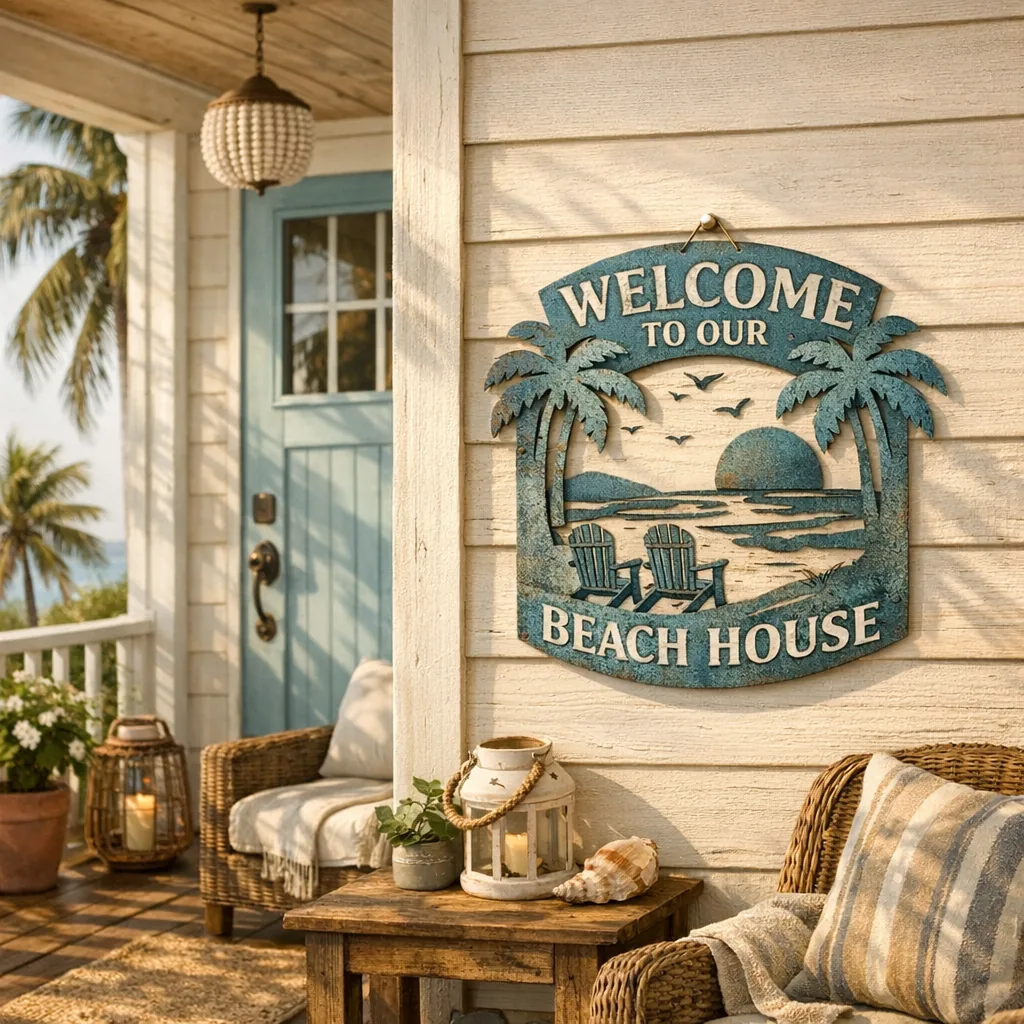
Aug
Custom Metal Beach House Signs
You want something that lasts — not another forgettable trinket, not a painted board that flakes after a season. From packing orders in Garland, Texas, I keep seeing the same reliable choice: a compact, custom metal sign. It’s solid, quietly personal, and simple to hang without turning the porch into a weekend project. People put them where they’ll actually be seen, and they stay there.
Personalized beach house metal signs don’t scream for attention. They mark a place. They greet visitors, anchor a porch vignette, and tell a short story — family name, house number, established date, or even coordinates. Below I’ll explain why metal performs better by the water, which personalization choices are genuinely useful, and how to pick size and style so the sign actually gets used instead of shoved in a closet.
Shop Personalized Metal Beach House Signs →
Why custom metal beach house signs keep selling
Short version: they endure and they mean something. Coastal conditions — sun, wind, salt spray — are brutal on materials that aren’t built for them. Treated wood looks good at first but needs sanding, sealing, and eventually replacement. Thin plastics yellow and crack. Powder-coated steel, by contrast, keeps its look without constant upkeep: it resists fading, won’t cup or warp, and preserves crisp detail. That mix of durability and personalization is why these signs show up on packing lists again and again.
Metal versus wood or plastic — what actually differs
People ask this all the time. The practical differences matter if your sign lives outdoors:
- Weather resistance: Powder-coated steel handles sun, salt, and rain far better than raw wood or thin plastics.
- Finish durability: A good powder coat seals the metal; you don’t get the flaking and peeling that painted wood often develops.
- Shape stability: Metal won’t warp, split, or cup from wet-dry cycles the way wood can.
- Low maintenance: A quick rinse or wipe a few times a year is usually all that’s needed.
- Longevity of detail: Cut lettering and small icons stay sharp longer on metal than on softer materials that abrade or fade.
Which personalization options people actually use
Not every customizable field adds real value. These choices matter in everyday use:
- Family name or house name — simple, timeless, and works well in photos.
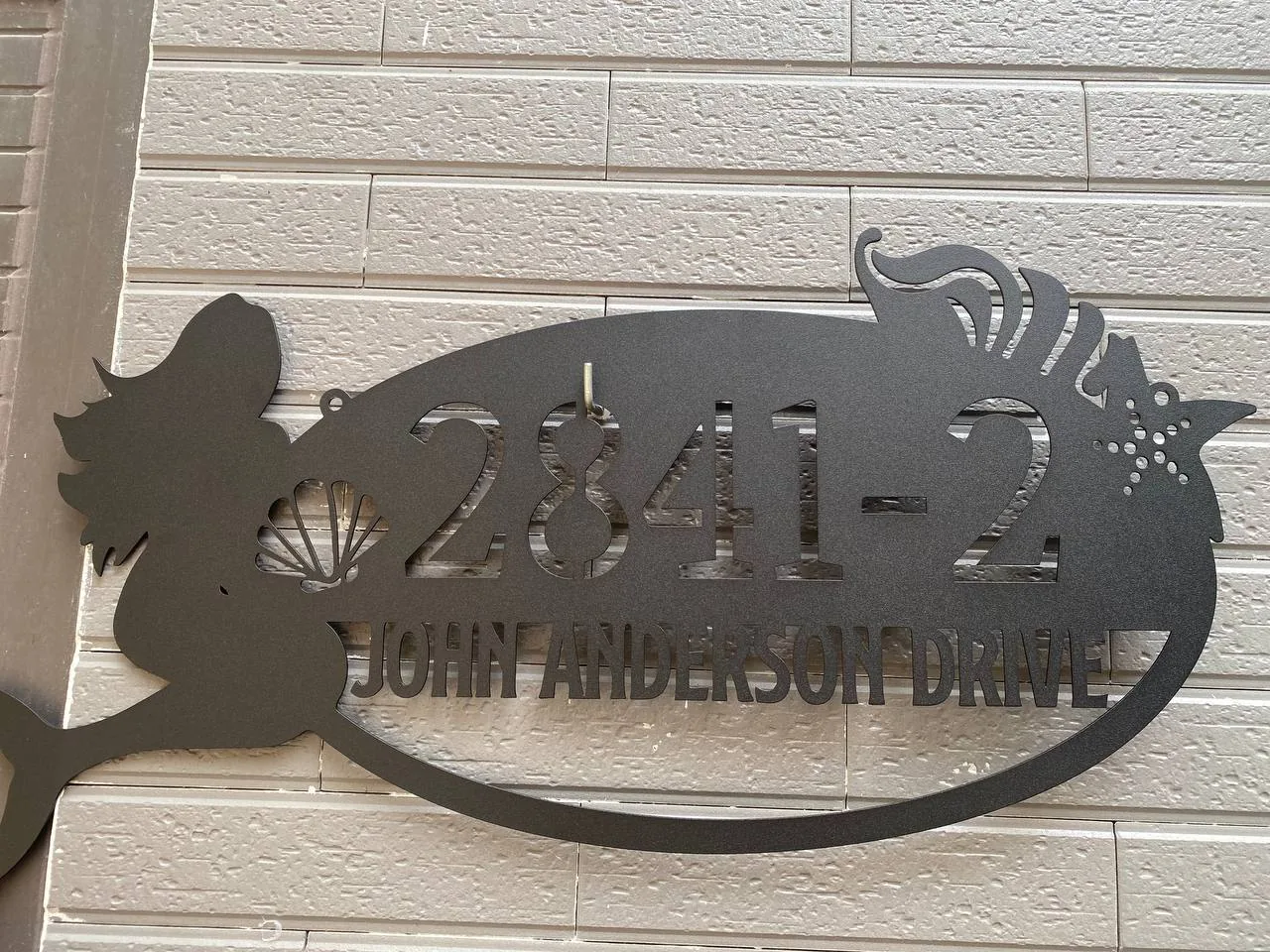
- House number — practical; it saves delivery headaches and helps guests find the place.
- Established date — gives character and an immediate sense of permanence.
- GPS coordinates — precise, a little clever, and great for sharing on social media.
- Short quote or motto — keep it tight; about 30 characters or less preserves the layout.
- Small icons — anchors, shells, turtles, palms, or waves add personality without clutter.
Popular design styles and why they work
Design tends to follow the property’s personality. A few approaches repeat because they photograph well and age gracefully:
- Minimal numeric plaques — clean and legible from a distance.
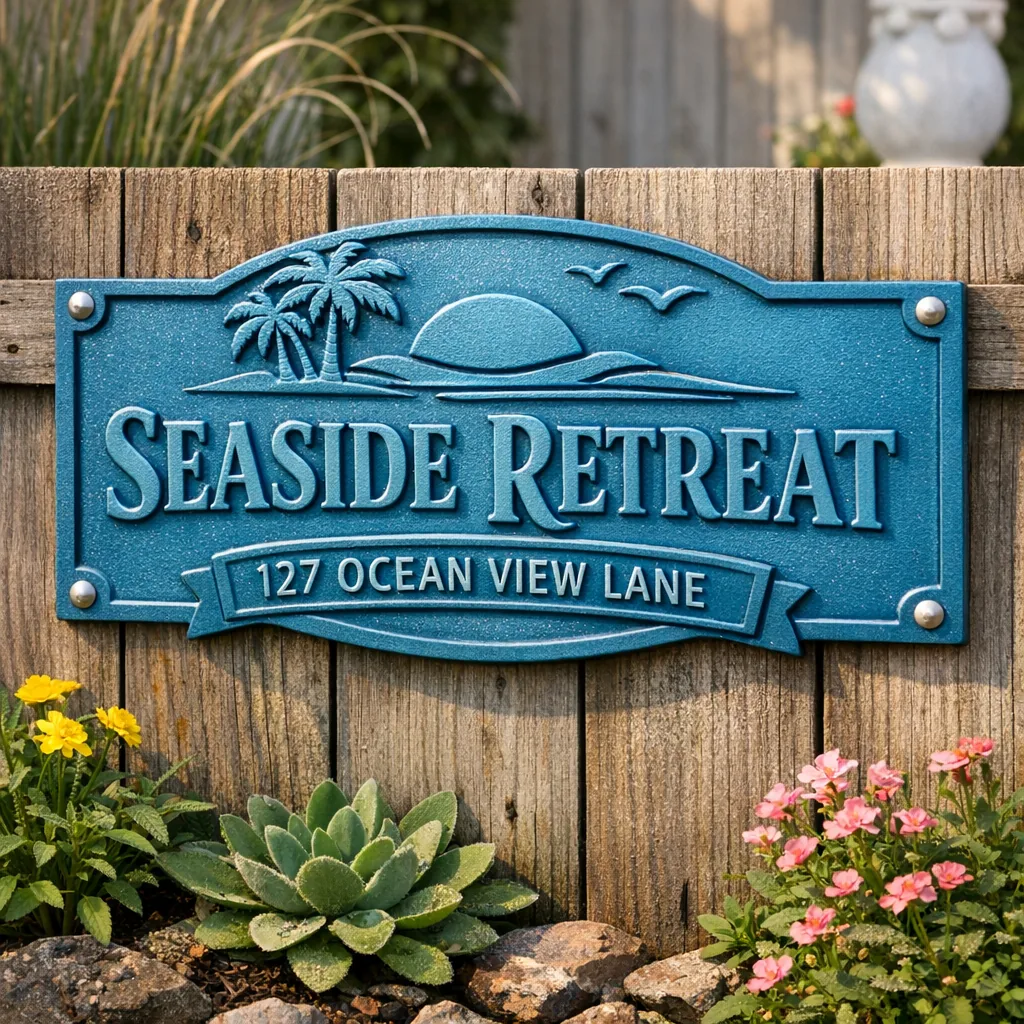
- Tropical silhouettes — palms, sunsets, and simple horizons for island cottages or tiki bars.
- Sea-life motifs — turtles, dolphins, and starfish for a relaxed, casual house.
- Classic nautical — anchors, compasses, and lighthouses for a maritime vibe.
- Wave-cut or rough edges — they read handmade while keeping metal’s low upkeep.
Best places to mount a metal beach sign
Where you hang the sign affects both visibility and longevity. Common, sensible spots include:
- Front porch or entryway — the first-impression spot and a favorite for photos.
- Gate or mailbox — practical for rentals and private driveways.
- Fence, deck, or patio — decorative yet still useful.
- Pool area or garden — choose a finish that tolerates occasional chlorine mist or irrigation spray.
- Above a rental check-in point — a small personal touch guests notice and remember.
Choosing size, finish, and layout — practical rules
Some rules learned at the packing table will save you second-guessing:
- Readability first: Think about where people will view the sign and size it accordingly. For porch viewing, 12–18 inches is usually right; for curbside visibility, 18–24+ inches is safer.
- Finish: Darker powder coats hide dirt and minor wear; bright colors pop against pale siding but show pollen and spray more readily.
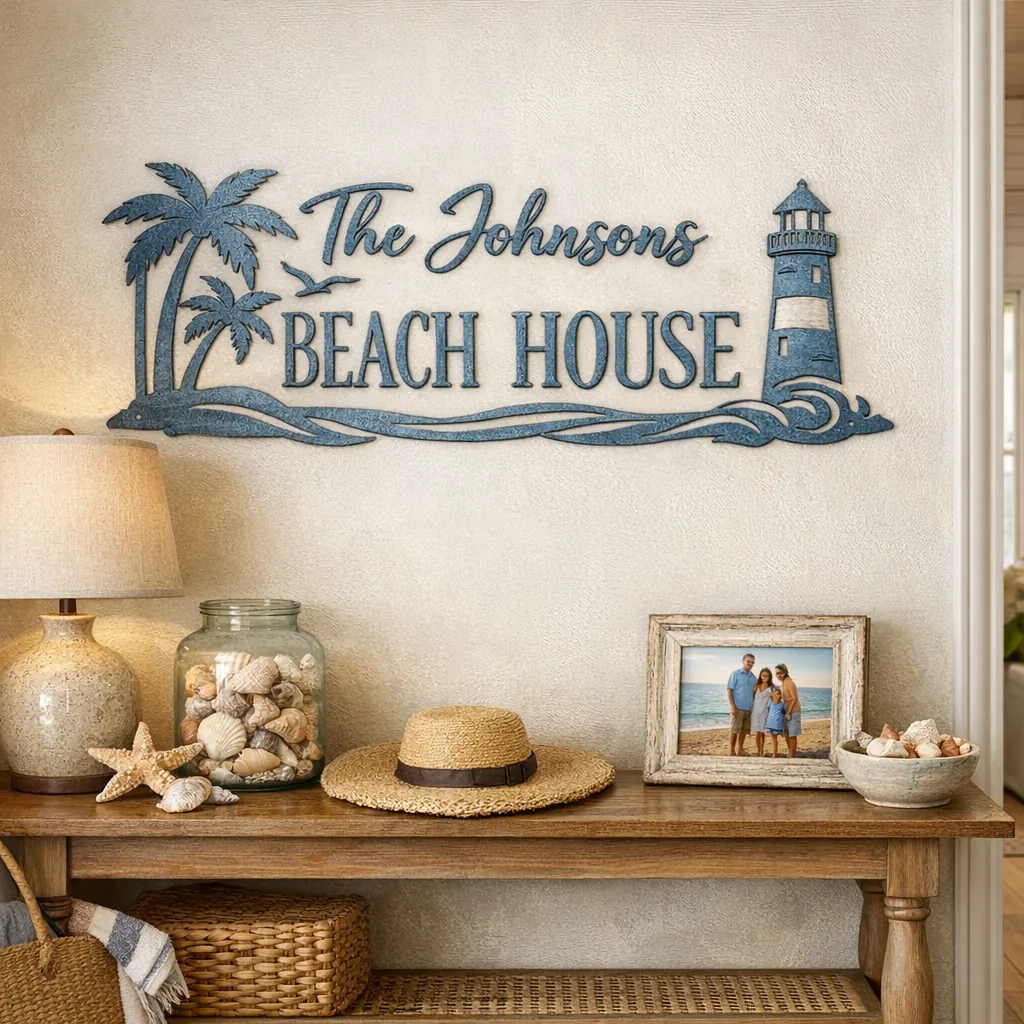
- Balance: Long names pair better with wider formats; short names often sit nicely centered with a small icon offset to one side.
- Typeface: High-contrast, simple fonts work best for distance legibility. Script looks nice up close but becomes hard to read when small.
- Edge style: Smooth edges read modern; wave-cut or hand-roughened edges feel casual and fit beachy settings.
Gifting a custom metal sign — why it works
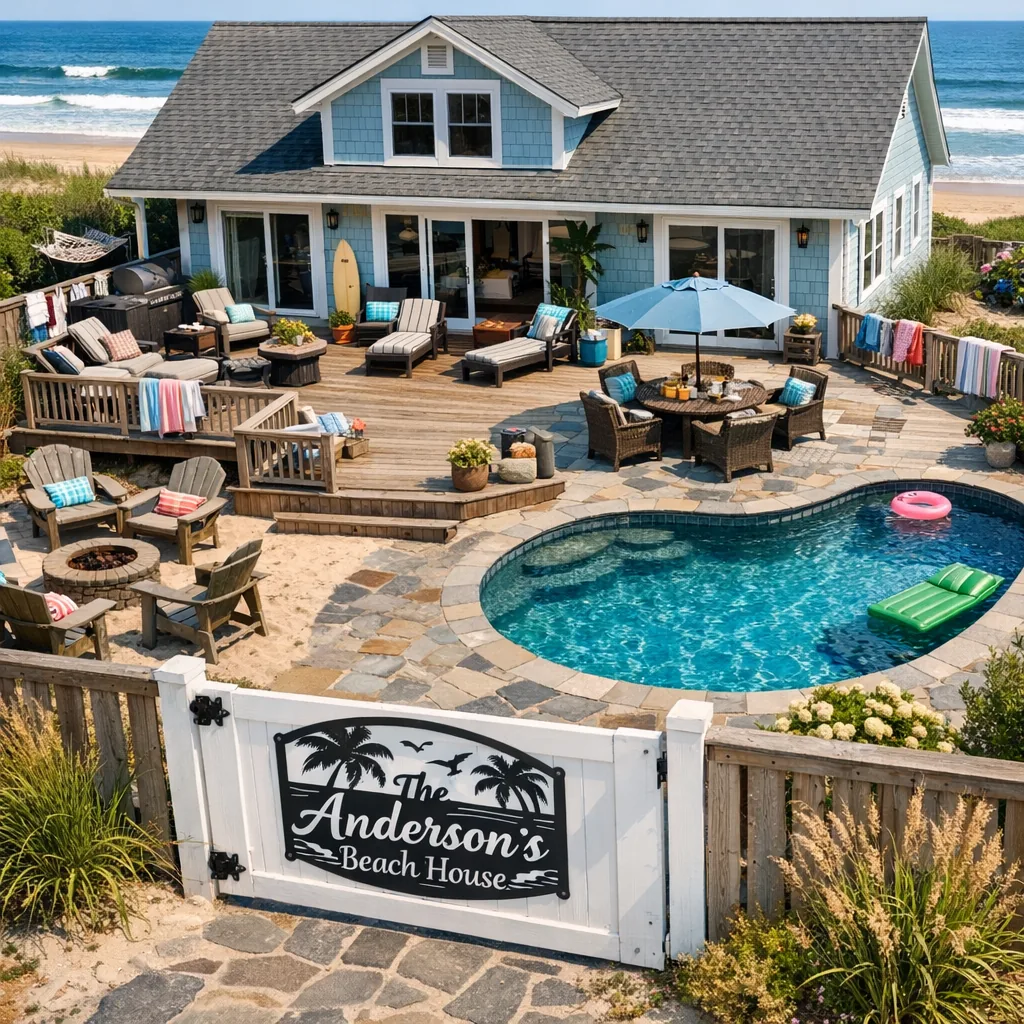
Want a present that actually gets used? A metal sign fits. It’s useful, durable, and photo-ready — recipients hang these where they’ll see them every day. Occasions that make sense include housewarmings, new homes, retirements, anniversary gifts for people who entertain, or an Airbnb welcome. One practical tip: include suggested mounting hardware or a short how-to note with the gift. That small extra saves time and frustration more often than you’d think.
Care and simple maintenance
Keeping a powder-coated metal sign looking sharp is straightforward:
- Rinse off salt and pollen with fresh water periodically.
- For stubborn grime, use a soft cloth and mild soap.
- Check mounting hardware annually — stainless steel screws or brackets resist salt air best.
- If a chip appears, touch it with outdoor metal paint to seal exposed metal and delay rust.
How metal signs solve common decorating headaches
Problem: You rent and can’t drill holes. Solution: choose a size that fits a porch beam or gate and hang with chains or outdoor-rated adhesive hooks — no drilling required. For heavier pieces, temporary but secure hardware options exist that won’t damage surfaces.
Problem: You want a meaningful present that won’t sit unused. Solution: a sign by the door or mailbox becomes part of daily life and shows up in family photos, not in a closet.
Problem: Coastal weather ruins wooden plaques and fades prints. Solution: powder-coated steel holds color and edge detail longer; that’s why many orders ship to shorelines around the country.
Design checklist before you order
Before you click purchase, run through this short checklist I share with customers who call late on a Sunday night:
- Primary purpose: address plaque, decorative nameplate, or gift?
- Measure the mounting location for proportion and visibility.
- Pick personalization: name, number, date, or coordinates?
- Choose finish: low-maintenance dark or high-visibility bright?
- Confirm mounting method: pre-drilled holes, hanging hardware, or adhesive?
- Spellcheck names and coordinates — most delays begin here.
Practical next steps
If you want an easy place to start, our personalized beach house metal sign options let you choose size, powder-coat color, and cut text or icons. We hand-review layouts before cutting, but double-check spelling — long names and transposed coordinates are common slip-ups. I’ve seen orders paused because someone typed “Micheal” and didn’t catch it.
FAQ
Can a custom metal beach house sign be installed without drilling into siding?
Yes. For renters or delicate surfaces, outdoor-rated adhesive hooks or hanging from a porch beam with chains work well. Heavier signs, however, perform best with mechanical fasteners, so match the method to the sign’s weight.
What personalization choices make a sign feel special?
Coordinates are specific and clever; a custom house name or an established date gives personality without being generic. For hosts, including the house number plus a small icon tied to the property — sea turtle, palm, or anchor — makes the sign immediately useful.
How do I choose the right size for curb visibility versus porch display?
Consider viewing distance. For curb visibility, go larger — at least 18–24 inches depending on setback. For a porch or entryway where guests approach on foot, 12–18 inches usually reads well. If unsure, measure the distance from the road or sidewalk to your mounting spot and size accordingly.
Are certain colors or finishes better near the ocean?
Darker tones hide dirt and fading; matte or textured powder coats disguise small scratches. Bright colors look great but need occasional rinsing to stay vivid. Avoid non-powder metallic paints; the protective powder coat is the real defense against salt air.
Do you check spelling and layout before cutting?
Yes — we manually review each layout. Still, check your entry carefully. Misspelled names and transposed coordinates are the most common causes of delays.
Ready to move from idea to finished piece? Pick a size and personalization that fits the spot and the people who’ll use it. A well-chosen sign quietly performs for years and shows up in the photos that matter. Start designing at the link above and save yourself trouble later with careful choices now.
