
News
Tattoo Studio Wall Decor
Aug
tattoo studio wall decor
Someone asked me the other day: how do I make a small, rented storefront feel like a tattoo studio without drilling holes or blowing the budget? That question is exactly why I wrote this. I’ve packed and shipped hundreds of metal signs from our Garland shop, listened to artists describe their studio vibe, and seen what actually gets photographed and shared. This guide focuses on practical, creative solutions for tattoo studio wall decor that work in real-life shops.
(Quick note: if you want to see examples of metal shop signage used as entrance features, check out how custom metal pieces can anchor a space like a reception wall or storefront.)
Shop Custom Tattoo Shop Sign →
Table of Contents
- Why your studio’s visual atmosphere matters
- Common decorating challenges (and simple fixes)
- Styles that work for tattoo shops
- Real ideas: where to hang what
- Buying guide: materials, size, finish, fonts, and mounting
- Creating an Instagram/TikTok-friendly wall
- Gift ideas for artists and shop owners
- FAQ
- Conclusion
Why the studio’s visual atmosphere matters
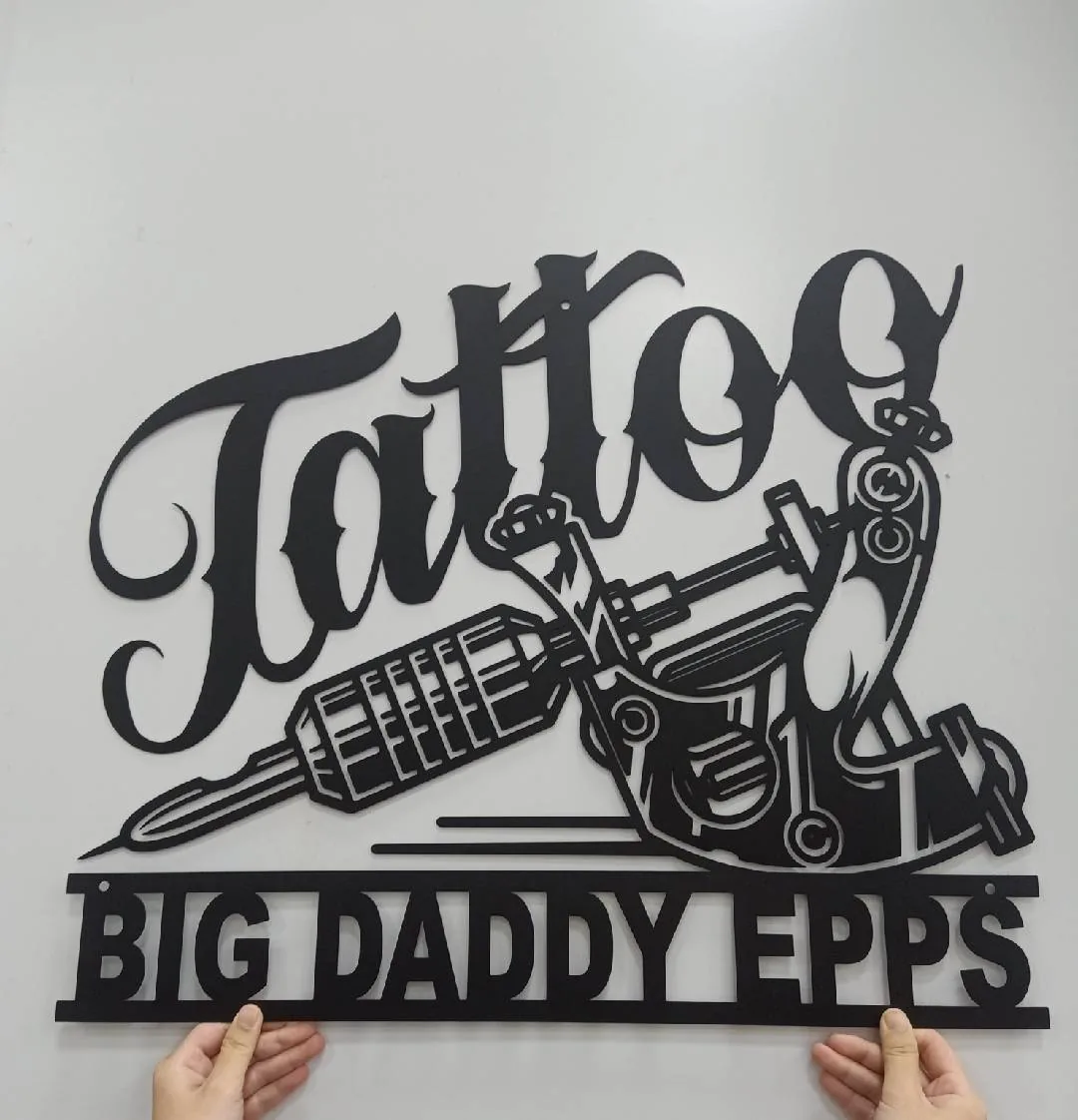
Tattoo studio wall decor isn’t just decoration. It signals professionalism, sets client expectations, and helps people feel comfortable in a space that can feel intimate or intimidating. A good wall treatment tells a story: the style you tattoo, the way you work, the kind of client you want. I’ve seen shy clients relax when they recognize a flash sheet on the wall. I’ve also watched artists gain confidence when their own name is mounted above the station. Little things change the mood a lot.
Common decorating challenges (and simple fixes)
1. You can’t drill into walls
For renters, damage-free solutions matter. Use heavy-duty removable adhesive hooks for lightweight frames, picture rails for medium pieces, or freestanding panels and easels for larger signs. Magnetic strips on painted metal frames work surprisingly well on steel-backed studs.
2. Small footprint, big personality
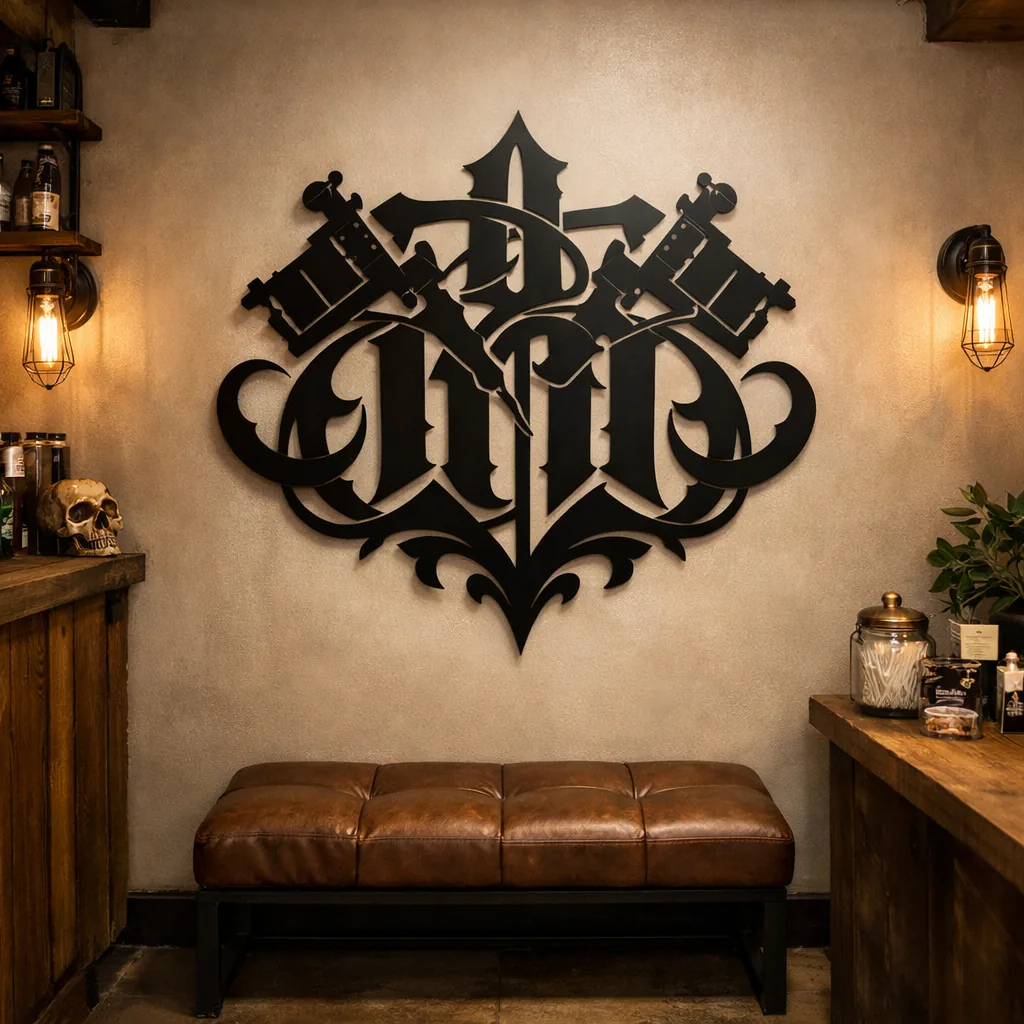
When square footage is limited, choose one statement piece instead of many small items. A custom metal sign with your shop name or logo becomes the room’s anchor — people look at it, take photos, remember it.
3. Too much visual noise
If your flash walls are already busy, keep decor minimal near client chairs. Reserve bold imagery for the reception wall or hallway where it can be appreciated without distracting the artist.
Styles that work for tattoo shops
Pick one dominant style and let the rest accent it.
- Industrial: exposed brick, black metal signage, Edison bulbs. Works great with bold, blocky fonts.
- Minimalist: clean lines, neutral palette, one laser-cut metal logo as a focal point.
- Vintage / Traditional: framed flash sheets, aged wood shelves, wrought-iron accents, and classic script signs.
- Gothic / Dark: matte black metal, skull motifs, dramatic lighting and rich wall colors.
- Rustic: reclaimed wood backgrounds with layered metal plaques and hand-painted details.
- Artistic / Eclectic: mix of custom artwork, mural panels, and personalized metal nameplates showing each artist’s personality.
Real ideas: where to hang what
Reception wall
This is where first impressions happen. Use a medium-to-large custom tattoo shop sign with your logo, shop name, and established date. If you have a small lobby, a single laser cut metal sign in black or contrasting color will read well and photograph nicely.
Studio entrance
A metal entrance sign mounted beside the door or above it helps clients find you. Slim, powder-coated metal survives temperature swings better than untreated pieces if the sign is exposed to the elements.
Tattoo stations
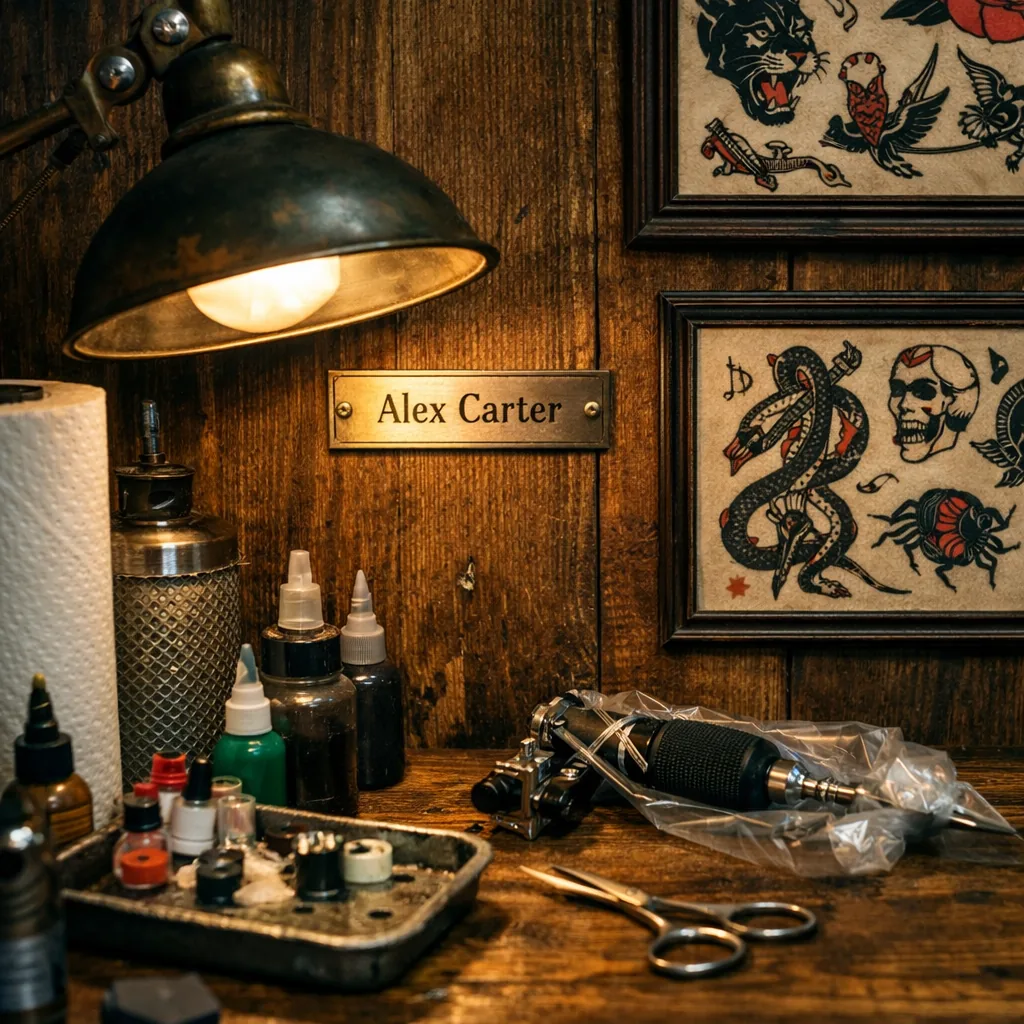
At the station, keep meaningful but compact items: an artist’s nameplate, a small framed flash, or a quote. Avoid large reflective pieces that can glare under lights.
Waiting area & hallways
Make the waiting area comfortable with layered textures: a metal wall art piece against a warmer wood frame, or a gallery wall mixing photos and one or two metal signs to prevent clutter.
Photo wall / social wall
Designate a single wall for photos—the one that’s best lit and uncluttered. A bold custom metal logo or an oversized laser-cut design makes a great backdrop for client photos and reels.
Why a custom metal sign often solves decorating problems
Artists ask me for a solution that reads well from a distance, looks professional, and lasts. Custom metal signs do that without being fussy. Powder-coated metal holds up better than raw metal in humid rooms and can be cut into complex shapes so your logo or a stylized skull looks crisp. They work as entrance signs, reception features, or station nameplates. I’d go with black or a dark powder coat for most shops — it photographs cleanly and plays well with most wall colors.
Design details: size, finish, font, complexity, and placement
- Size: For a reception wall, 24–36 inches wide is a common sweet spot. For station nameplates, 8–12 inches is usually enough. Consider sightlines — people should read your sign from the door.
- Finish: Powder-coated finishes resist chipping and give a matte or satin look. Black remains our bestseller; bright colors pop if your walls are neutral.
- Font: Script fonts read great on close-up signs but lose clarity at distance. Choose a bold, clean type for entrance or storefront signs.
- Design complexity: Laser cut metal allows for fine details, but tiny open shapes can collect dust and lose legibility. Simplify logos when scaling up or down.
- Mounting: Standoffs add dimension and cast shadow; flush mounts look modern and minimal. For renters, use picture rails, adhesive anchors rated for the weight, or a freestanding frame.
Practical decorating tips
- Contrast matters: dark metal on light walls or vice versa improves readability in photos and in person.
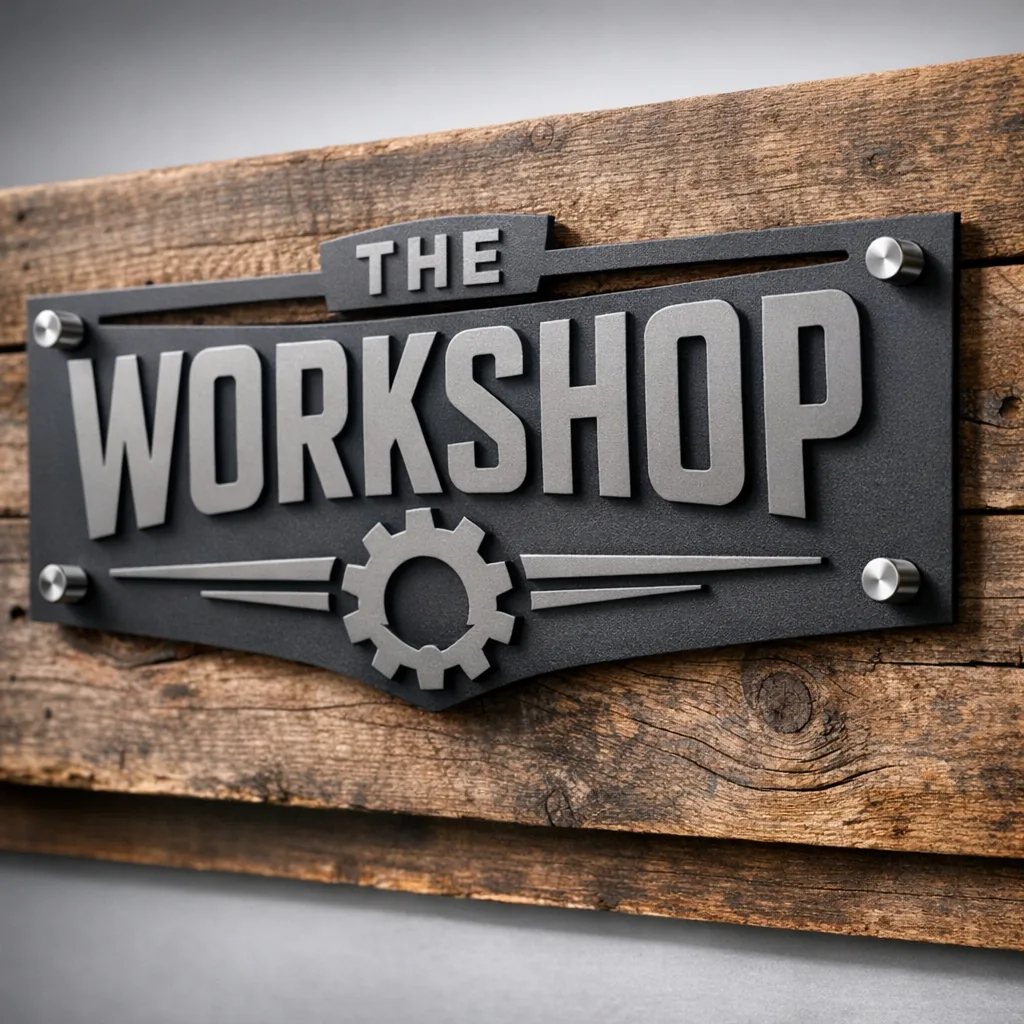
- Layering works: mount a metal sign on reclaimed wood or a painted panel to add warmth without extra clutter.
- Scale to function: don’t put large statement pieces at the tattooing chair where they can intrude on the workflow.
- Lighting: a single directional sconce or LED strip behind a sign makes it pop for photos.
- Maintenance: a quick microfiber dusting keeps laser-cut edges crisp; avoid harsh chemicals on powder coats.
- Brand cohesion: match sign style to your tattoo style — traditional shops often lean toward vintage metals; modern shops favor clean, laser-cut logos.
Buying guide: what to ask before ordering a sign
Before you click buy, get answers to these:
- What size will read well from the doorway?
- Do I want standoffs, flush mount, or a backer panel?
- Is the finish powder-coated or raw metal? Powder coat is commonly chosen for a protective finish suited to long-term display.
- Can the design be simplified for small nameplates or enlarged without losing integrity?
- How will it be mounted in a rented space?
Personalization ideas for tattoo studio wall decor
Personalized tattoo shop decor makes a space feel lived-in. Try these:
- Artist nameplates at each station — simple, readable fonts.
- Shop established date under the logo for a classic touch.
- Meaningful quotes in a single-script line over a couch or along a hallway.
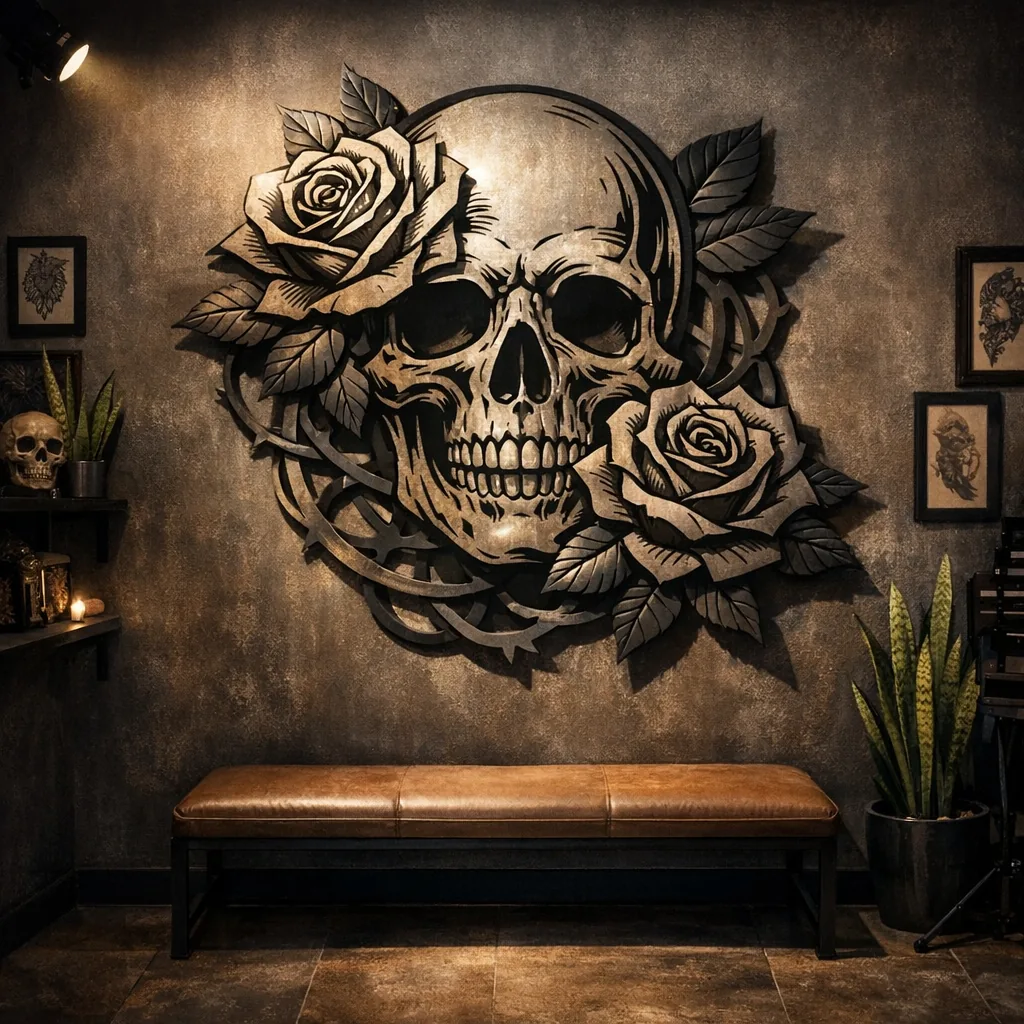
- Custom artwork or a stylized version of a favorite flash piece turned into laser cut metal wall art.
Creating an Instagram/TikTok-friendly wall
Make it easy for clients to take shareable photos. Here’s what works:
- Pick one uncluttered wall with flattering lighting. Natural light is best, but a warm LED works well for evening shoots.
- Use a bold focal point — a metal logo or oversized laser-cut piece framed by negative space.
- Add a small prop or bench that fits your brand (a worn leather stool, a vintage mic, or a painted stool). Clients pose naturally when there’s somewhere to sit.
- Consider subtle branding: a small metal tag with your handle near the photo wall means shares point back to you.
Gift ideas for tattoo artists and shop owners
Artists love personalized, practical gifts. Think: custom metal studio signs, small laser-cut nameplates for stations, or a decorative metal panel featuring a favorite motif (skull, rose, dagger). These feel personal without being gimmicky. I’ve packed signs for Mother’s Day gifts, shop anniversaries, and last-minute grand openings — an engraved nameplate is often the one thing an artist didn’t realize they needed.
How to combine metal signs with other decor
Metal plays well with wood, leather, and fabric. Use a metal logo over a wooden backer to soften the look. Pair metal pieces with framed flash to showcase process and finished work. Don’t forget greenery—one small plant can offset the heaviness of dark metal.
When less is more
It’s tempting to fill every inch. Resist that urge. A streamlined set of elements—logo sign, a photo wall, an artist nameplate—reads as intentional. Your work should be the star; the wall decor supports it.
Example pieces and inspiration
Some tattoo artists use a bold custom tattoo shop sign as an entrance feature, while others prefer a series of small, personalized metal nameplates at each station. If you want to see how a custom metal sign can anchor a space without shouting, consider browsing examples of metal signs used in shop settings for ideas and proportions.
FAQ
How can I pick the right size for a reception or storefront sign?
Measure the viewing distance: stand where clients will first see the sign and decide how large the letters need to be to read easily. As a rule of thumb, letters 2–3 inches tall are legible across a small lobby; larger storefront signs benefit from 4–6 inch lettering. Also consider the wall’s proportions — a sign too small will look lost; too large can dominate the space.
What mounting options work best in rented spaces?
Non-invasive options work best: picture rails, removable heavy-duty hooks, or freestanding frames. For heavier pieces, a backer panel that hangs from a single hook spreads the weight and reduces risk. I’ve shipped many signs to renters who then mounted them on plywood backers that hang with one anchor.
Which finishes photograph best for social media?
Matte or satin powder-coated finishes reduce glare under studio lights and look cleaner in photos. Black is especially forgiving on camera; a contrasting color can pop if your walls are neutral. Avoid glossy finishes if you rely on bright overhead lighting.
How do I choose a design that matches my tattoo style?
Look at your most consistent work and pull from that: traditional artists often lean toward bold lines and classic motifs (roses, daggers); fine-line artists may prefer minimalist logo treatments. The sign should echo your visual language, not compete with it.
Can a custom metal sign double as the studio logo and a photo backdrop?
Yes. A well-sized, centrally placed custom metal sign can be both your logo display and the focal point for client photos. Place it against an uncluttered wall with good light and a small prop or bench for subjects to sit on.
Conclusion
Decorating a tattoo studio comes down to choices that make the space feel intentional and true to your work. Pick a dominant style, use one or two statement pieces like a custom metal sign, and keep station areas functional. Little, meaningful personal touches—an artist nameplate, an established date, a favorite flash reimagined in metal—do more than fill wall space. They tell the story of your craft. If you measure, plan for mounting in a rented space, and pick finishes that photograph well, you’ll end up with tattoo studio wall decor that looks professional, invites clients in, and holds up over time.
