
News
How to Hang a Metal Sign
Aug
I won’t sugarcoat it: people call or message us when a sign they thought would last a lifetime starts to look tired. Sometimes the paint peels where a screw sat, sometimes wind bent a corner, and sometimes a sign simply came off a brick wall because the wrong anchors were used. Those are the sort of problems I see every few weeks in the shipping area; they’re avoidable if you match the mounting method to where the sign will live.
Below I’ll cover the safest ways to hang a metal sign made from powder-coated steel both outdoors and inside, and why those choices work. I pack these signs by hand and have watched customers place them on porches, garden stakes, garage doors, and inside family rooms. Short version: don’t guess—pick your hardware for the surface, and you’ll be fine.
Shop Personalized Cyclist Garden Stake →
Quick decision: what’s the surface?
Before you drill a hole, decide clearly where the sign will go. Different surfaces need different fasteners:
- Wood (siding, fence, cedar post): simple screws work great.
- Brick or stucco: use masonry anchors or expansion bolts.
- Drywall/Sheetrock (interior): use toggle bolts or wall anchors rated for the weight.
- Metal surfaces (garage door, metal siding): sheet-metal screws or rivets work; consider rubber washers to stop rattling.
- Garden bed or lawn: use a stake or garden post instead of screwing into soil.
Tools and hardware I recommend
Here’s what I grab most days on the shop floor when customers ask for advice. Keep it in the truck or toolbox.
- Drill with bits (masonry bit for brick, wood bit for siding).
- Screws: stainless or exterior-grade, length depending on substrate (1½”–2½” for wood).
- Masonry anchors: plastic sleeve anchors or sleeve anchors for heavier signs.
- Toggle bolts for hollow walls.
- Rubber washers or nylon spacers to prevent paint rub-through and allow airflow behind the sign.
- Level and measuring tape. Use a pencil to mark—trust me, eyeballing rarely ends pretty.
How to hang a metal sign on wood (porch, fence, post)
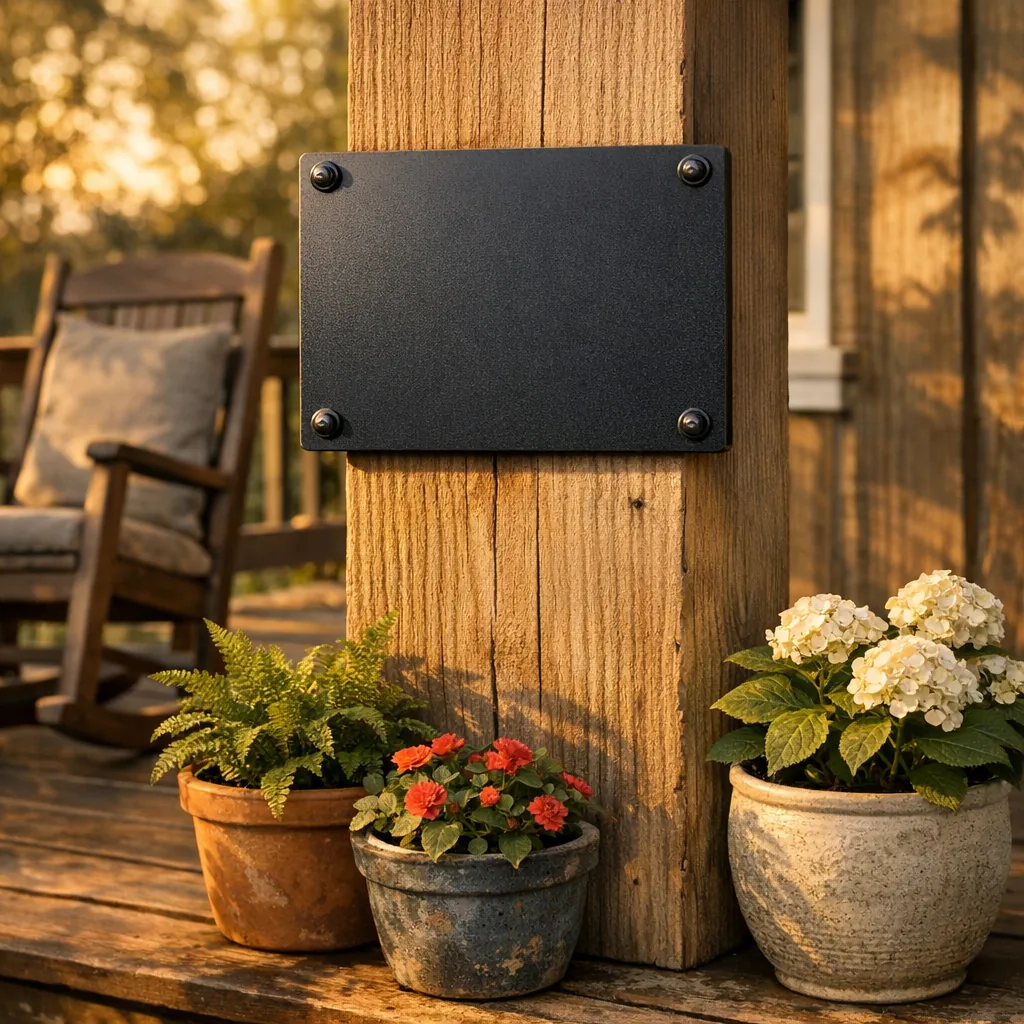
I’d go with the 18-inch size for most porches, but whatever size you picked, wood is the easiest surface. The sign we make in powder-coated steel is fairly forgiving.
- Hold sign in place (use a helper) and mark hole centers through the sign’s mounting points.
- Pre-drill pilot holes slightly smaller than your screw shank to prevent splitting (especially with cedar or pine).
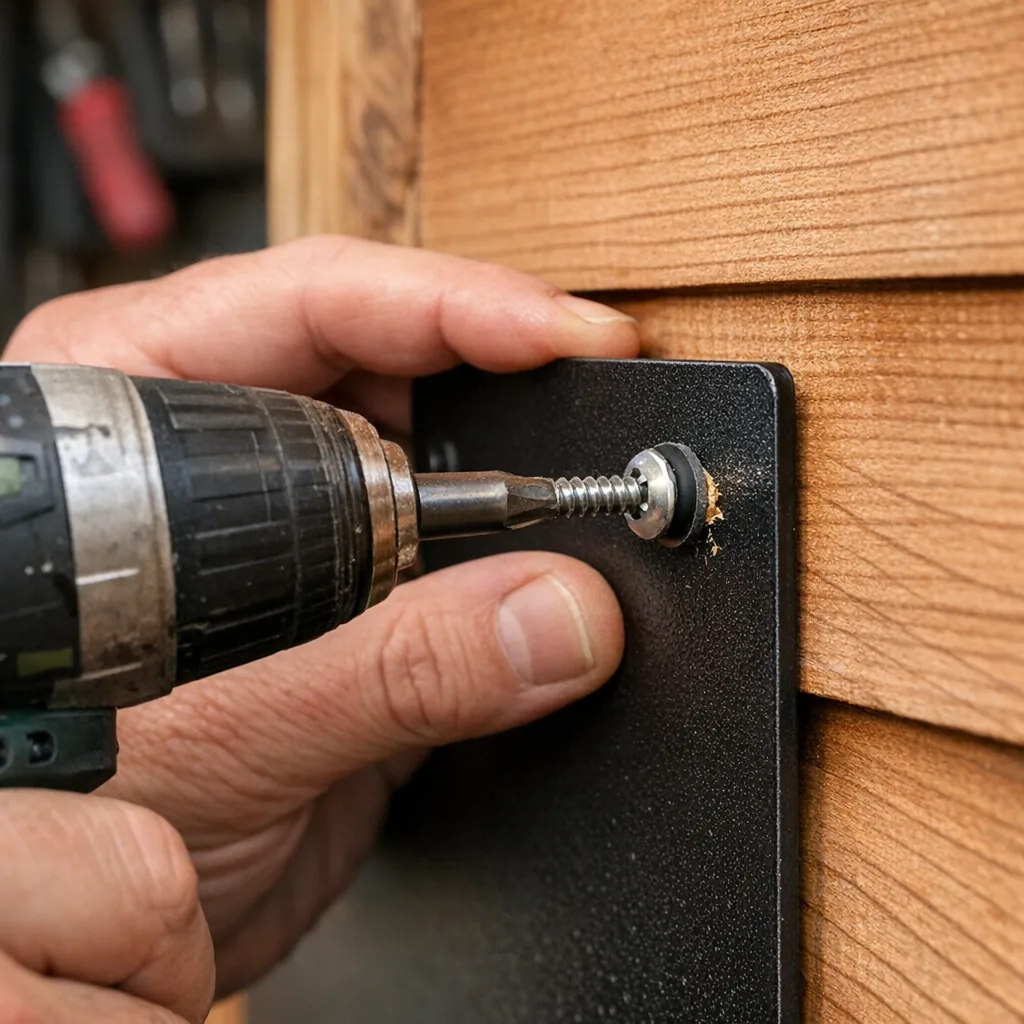
- Put a rubber washer between the screw head and the sign to prevent the paint from being scraped while tightening.
- Screw in until snug. Don’t over-tighten—metal can flex and you’ll strip the wood or pull the screw head through the sign hole.
That’s it. If the sign is heavy or in a windy spot, use carriage bolts with washers and nuts from the back side of the board.
How to hang a metal sign on brick, mortar, or stucco
This is where people often call after they’ve already drilled and broken a bit. Brick and mortar behave differently—if you anchor into the mortar, you usually get a stronger hold than drilling into the brick face.
- Mark your points and use a masonry bit. Start slow and keep the bit straight.
- Insert sleeve anchors or plastic anchors sized for your screw.
- Use screws long enough to bite into the anchor fully. For heavier signs, use concrete screws or wedge anchors.
- Use a bit of silicone around the screw head if you’re worried about water getting in (helps on stucco).
One practical note: if you’re mounting on a historic brick wall, talk to the landlord or homeowner about patching. I’ve seen customers drill into a gorgeous old chimney and regret it.
How to hang a metal sign on drywall or interior plaster
Inside, the weight is usually less of an issue, but you still don’t want a sign to pull out and knock a lamp over. Toggle bolts and heavy-duty anchors are your friends.
- Find a stud if possible and screw directly into it for the best hold.
- If no stud: use a toggle bolt or spring anchor rated for the sign’s weight.
- Place rubber spacers if you want a floating look—a small gap hides imperfections and helps ventilation behind the sign.
Tip from the packing bench: many customers mount signs above mantels or beds. Put a drywall hook with a safety wire for extra peace of mind if the sign is in a high-traffic place.
How to hang a metal sign on metal or composite surfaces
Metal buildings and garage doors are common spots. You don’t want noisy rattling or screwed-in heads that corrode.
- Use self-tapping sheet-metal screws with neoprene washers to stop vibration and seal the hole.
- Rivets are neat and quick; they’re permanent though—plan accordingly.
- If you don’t want holes, consider heavy-duty 3M outdoor mounting tape on clean, dry surfaces. It’s great for signs that aren’t massive and won’t sit in standing water.
Using garden stakes and posts instead of wall mounting
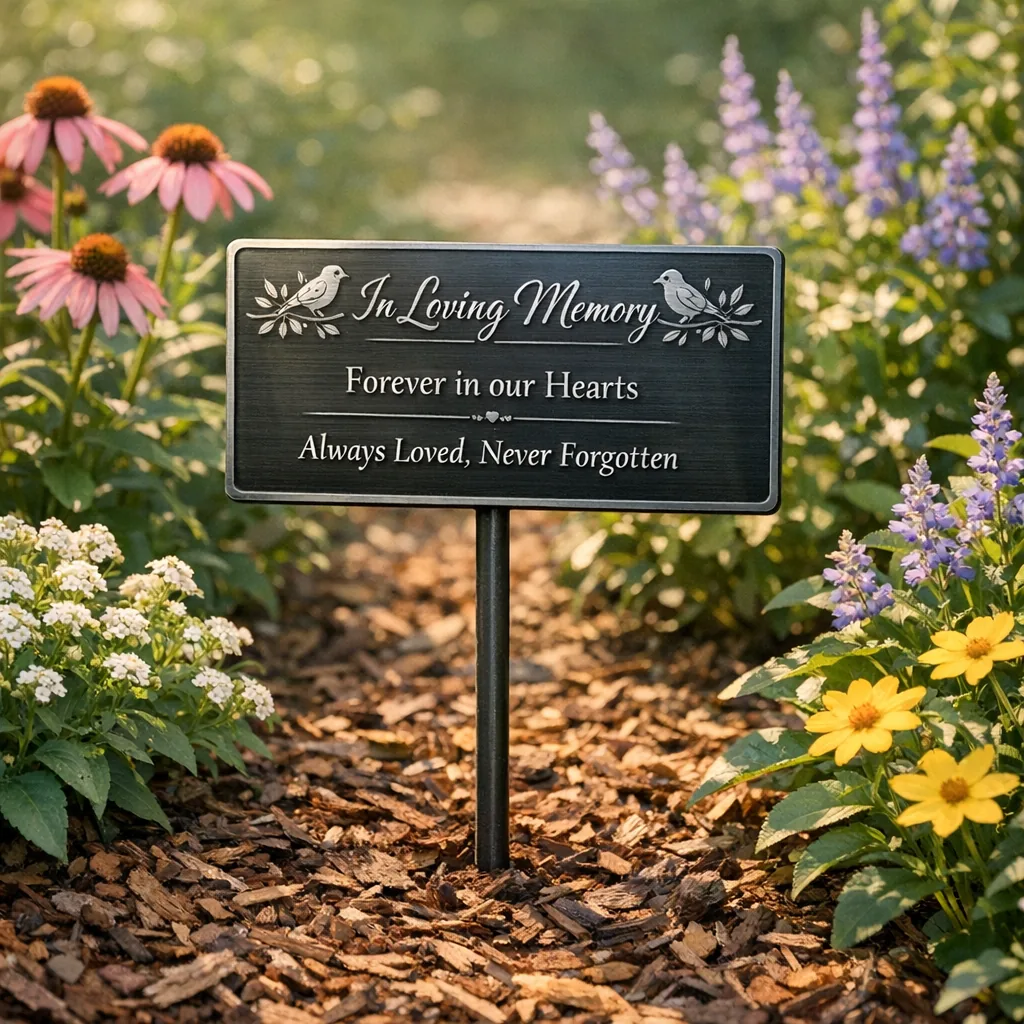
For gardens, lawns, and memorial placements I often recommend a stake. It avoids drilling into anything and keeps the sign off the ground where water and mulch can cause wear.
- Choose a steel or treated wood stake tall enough to raise the sign above mulch—6–12 inches of clearance is good.
- Bolt the sign to the stake with carriage bolts and washers. Use lock nuts so mowers don’t loosen things over time.
- Set the stake deep enough and tamp soil around it; add gravel if drainage is poor.
We sell and advise customers on personalized garden memorial stakes for a reason—they’re simple, respectful, and hold up well.
Hanging heavier signs and preventing paint damage
Powder-coated steel is tough, but the edges around a screw hole can see stress. Use these small but important steps:
- Use rubber or nylon washers to keep metal-on-metal contact from chipping the coating.
- If you must drill through the sign for custom placement, deburr the hole and touch up with a matching paint or clear coat.
- For very heavy pieces, use multiple mounting points and, if possible, an entry-level French cleat or keyhole slots that distribute weight.
How to hang a metal sign (step-by-step single method)
If you want one reliable method that covers a lot of ground, try this: measure, level, pre-drill, rubber washer, screw until snug. That sequence has saved more than one porch sign from early failure.
- Measure and mark: use a level and mark two points for the mounting holes.
- Pre-drill with the appropriate bit for your surface.
- Add rubber washers on the screw to protect the powder-coating.
- Screw in evenly and test the fit. If the sign wobbles, loosen and add spacers until it sits flush without stress on any one point.
Practice makes perfect. The first time you hang a sign you might fuss with the level more than the drill. That’s normal.
Why powder-coated steel works well outdoors
We use powder-coated steel on most of our metal signs because it handles sun and rain better than plain steel. The coating bonds to the metal and keeps moisture from sitting directly on the surface. What that means for you: less surface rust and less flaking paint over time, especially if you mount with the right hardware and keep the sign off standing water.
Also: powder-coating tolerates screws and rubber washers. If you follow the fastening tips above, a powder-coated steel sign will outlast many wood and plastic alternatives in an outdoor setting.

Common mounting mistakes I see (and how to avoid them)
- Wrong anchors for the surface — ask or look up the substrate before buying fasteners.
- Over-tightening screws — tight enough to be secure, not tight enough to bend the sign or strip holes.
- Ignoring drainage — mulch or soil pressed against the bottom edge will speed corrosion. Leave a gap.
- Using cheap tape for windy exterior spots — it fails fast. Use mechanical fasteners where possible.
Finishing touches and seasonal care
Once mounted, walk by the sign every few months. Tighten loose screws, clear away leaves and mulch, and if you notice small chips, touch them up with a matching spray paint or clear sealer. If you live on the coast, rinse salt spray off occasionally—salt is what will eat paint faster than anything else.
If you’d rather avoid drilling or want a garden option, take a look at some of our custom garden metal signs—they’re designed to be mounted on stakes and keep memorial pieces out of direct soil contact.
FAQ
What’s the best single way to learn how to hang a metal sign without damaging it?
Start by practicing on scrap wood or an inconspicuous area with the same hardware. Use rubber washers and pilot holes to see how tight you can go without deforming the metal. That hands-on test beats guessing.
Can I hang a powder-coated metal sign on brick without special tools?
You’ll need a masonry bit and anchors for brick or stucco. Trying to use wood screws alone will likely strip out or pull back—get the right anchors and take your time drilling.
How do I hang a metal memorial sign in a garden so it lasts longer?
Mount the sign to a stake or post and keep the bottom edge at least several inches above mulch or soil. Use carriage bolts and lock nuts and tamp the post in gravel for drainage. This avoids the paint-on-soil contact that speeds corrosion.
Is tape ever OK for how to hang a metal sign outdoors?
Only for very small, lightweight signs in protected, non-windy spots. For anything exposed to weather or wind, mechanical fasteners are a much safer bet.
Do I need special screws because the sign is powder-coated steel?
Not special screws, but pick stainless or exterior-grade screws and use rubber or nylon washers to protect the coating where the screw head contacts the sign.
