
News
Metal Wall Art for Dining Room
Aug
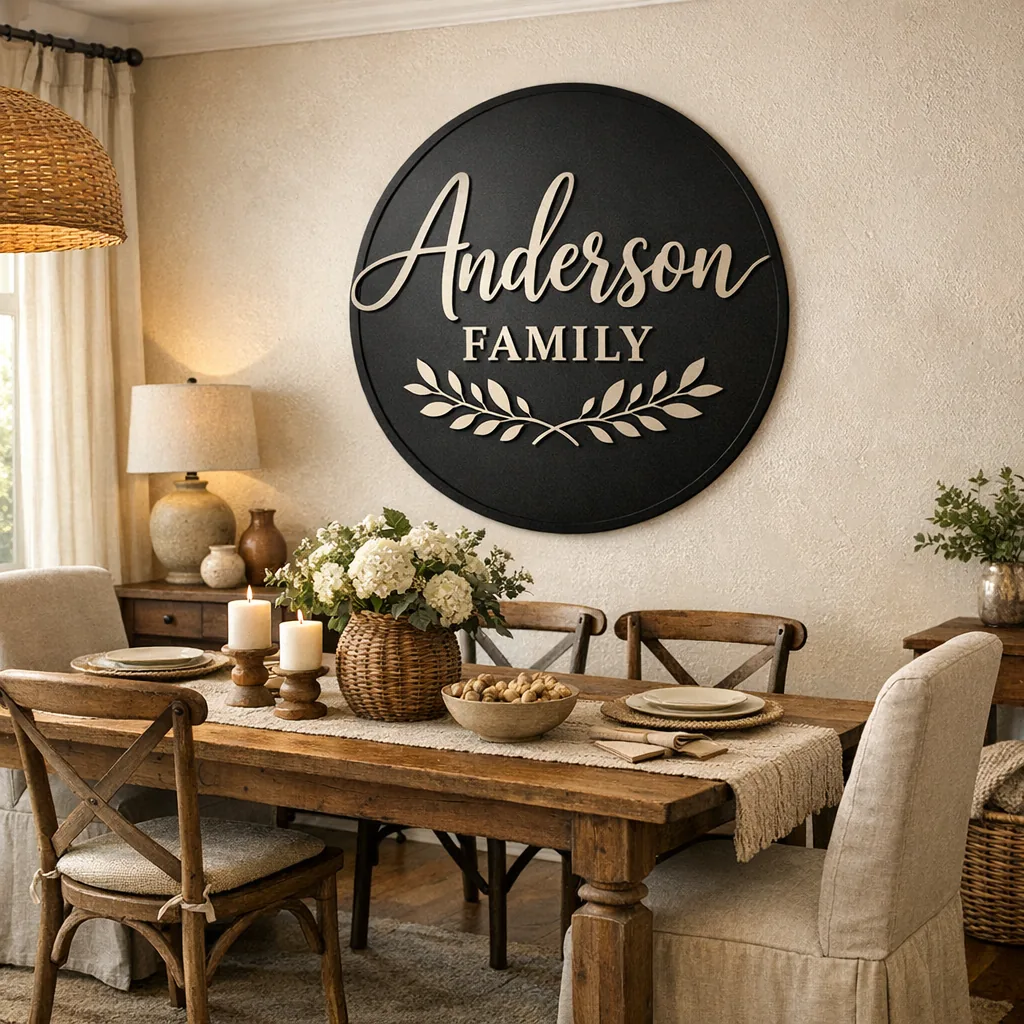
Sun, humidity, and a swinging screen door — those are the kinds of things people don’t think about until their outdoor sign peels or a painted wood panel cups at the edges. The same concerns come up when someone asks if metal wall art will behave over a dining room wall that also gets direct light or a lot of temperature swings from an adjacent kitchen. You want art that stays true to shape and color. You want it to look like you hung it yesterday five years from now.
I cut, powder-coat, and pack these things daily. So I’ll skip the fluffy talk and get practical: what materials hold up, how to pick size and color, and where to mount pieces so a dining table actually benefits from them.
Shop Personalized 25th Anniversary Signs →
Common materials and how they compare
When folks say “metal wall art” they usually mean cut steel with a powder-coat finish. But in interiors you’ll also see wood, plastic/composite panels, and aluminum. Here’s the trade-off, straight.
Steel (powder-coated)
- Weight: solid. Expect 1.5–4 lb for a 12″ piece; much more for larger sizes. Anchors matter.
- Finish: powder-coat protects against moisture and UV fade better than simple paint. It’s baked on at controlled temps; thickness typically 40–60 microns on our parts.
- Stability: won’t cup or swell like wood. It holds flat to within a few millimeters over a 36″ span if cut and formed properly.
- Look: crisp edges, fine detail from laser cutting.
Wood
- Warmth: yes. Dimensionally unstable in high humidity and with direct sun — expect some movement over seasons.
- Finish: needs sealing every few years if exposed to sunlight through windows.
Plastic / PVC / composite
- Lightweight and inexpensive. Can warp under heat (oven walls, near stoves).
- Colors can fade faster unless UV-stabilized additives are used.
Aluminum
- Light for size, corrosion-resistant by nature. Not as rigid as steel unless thicker gauge is used.
- Great for large pieces that need to be light on anchors.
Why metal wall art for dining room often wins
Short answer: stability and finish. If your dining room gets strong light from west-facing windows or sits above an attached garage where temps swing, powder-coated steel keeps its edge — literally and figuratively. It doesn’t cup like wood. It doesn’t soften like cheap plastics. The powder coat gives a consistent surface that resists scuffs and holds color.
Black is still our best-seller. Dark contrast reads well across styles — farmhouse, industrial, modern. But a pale matte or brushed-metal look works for contemporary rooms where a lighter touch is needed.
Matching style to your dining room
Pick a design that talks to the room’s bones: materials, lighting, and the table itself. Here are quick rules I tell customers on the packing bench.
Farmhouse
- Choose warm finishes or a slightly distressed powder-coat. Round botanical shapes and script family-name signs fit well above a long farmhouse table.
Rustic
- Heavier, chunkier silhouettes work: barn-wood motifs, stag heads, grape or vine motifs. Use thicker gauges so the piece reads from across the room.
Modern
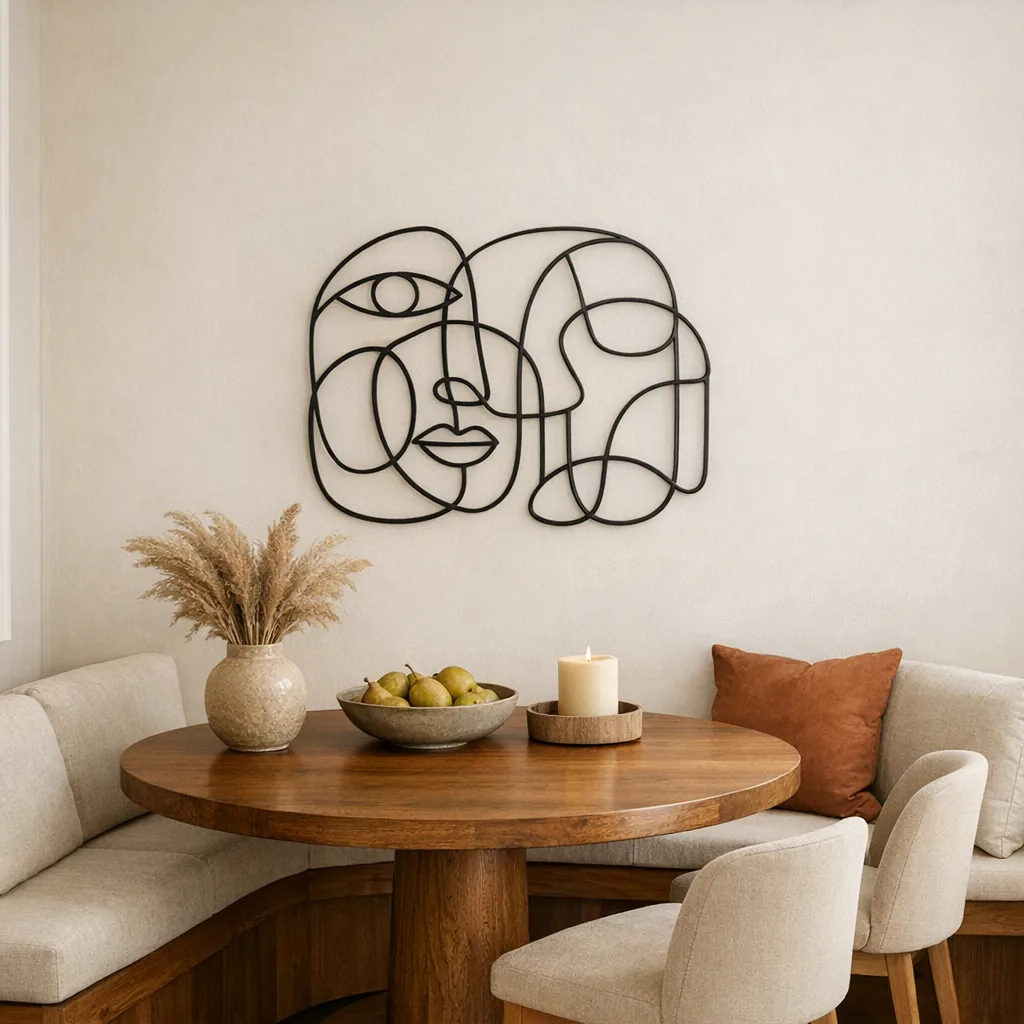
- Think geometric, negative space, minimal lines. A single, oversized metal circle or abstract line art above a mid-century table lands well.
Industrial
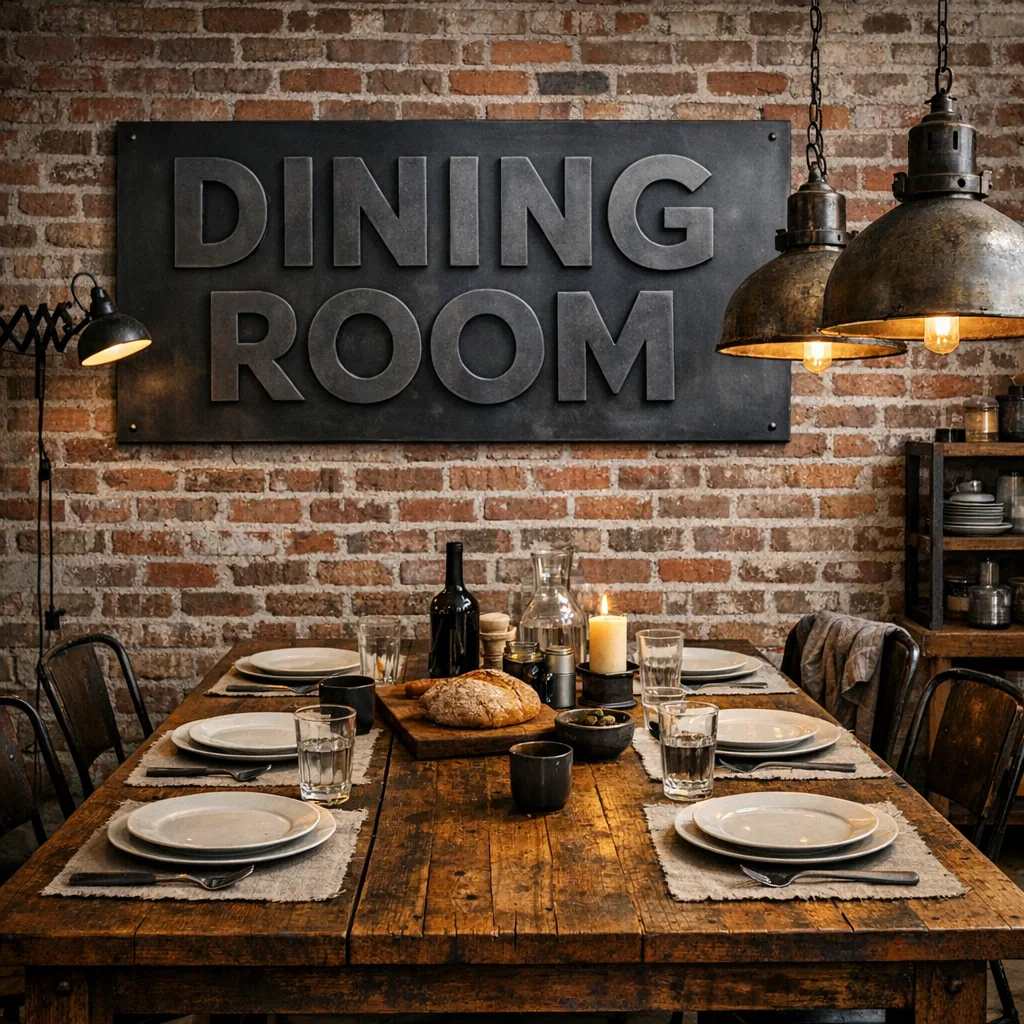
- Visible fasteners, raw metal tones, and bold lettering suit exposed brick and concrete. Consider a powder-coat in matte black or a clear coat over raw cut steel.
Contemporary
- Play with negative space and lighter colors. Thin-profile aluminum or steel with a pale finish keeps the room airy.
Sizing and placement — practical measures
Measurements matter. I tell people to measure the table and the wall before they decide. Here are hard numbers to use as starting points.
- Above a rectangular table: artwork width should be about 60–75% of the table width. For a 72″ table, target art 43–54″ wide. Yes, that big often looks better than a small, lonely piece.
- Above a round table: pick a piece that’s 50–70% of the table diameter. A 48″ table pairs well with a 24–34″ round or oval sign.
- Low ceilings: keep top of art no higher than 8–10″ from ceiling; hang so center sits roughly 60–66″ from the floor unless a chandelier dictates sightlines.
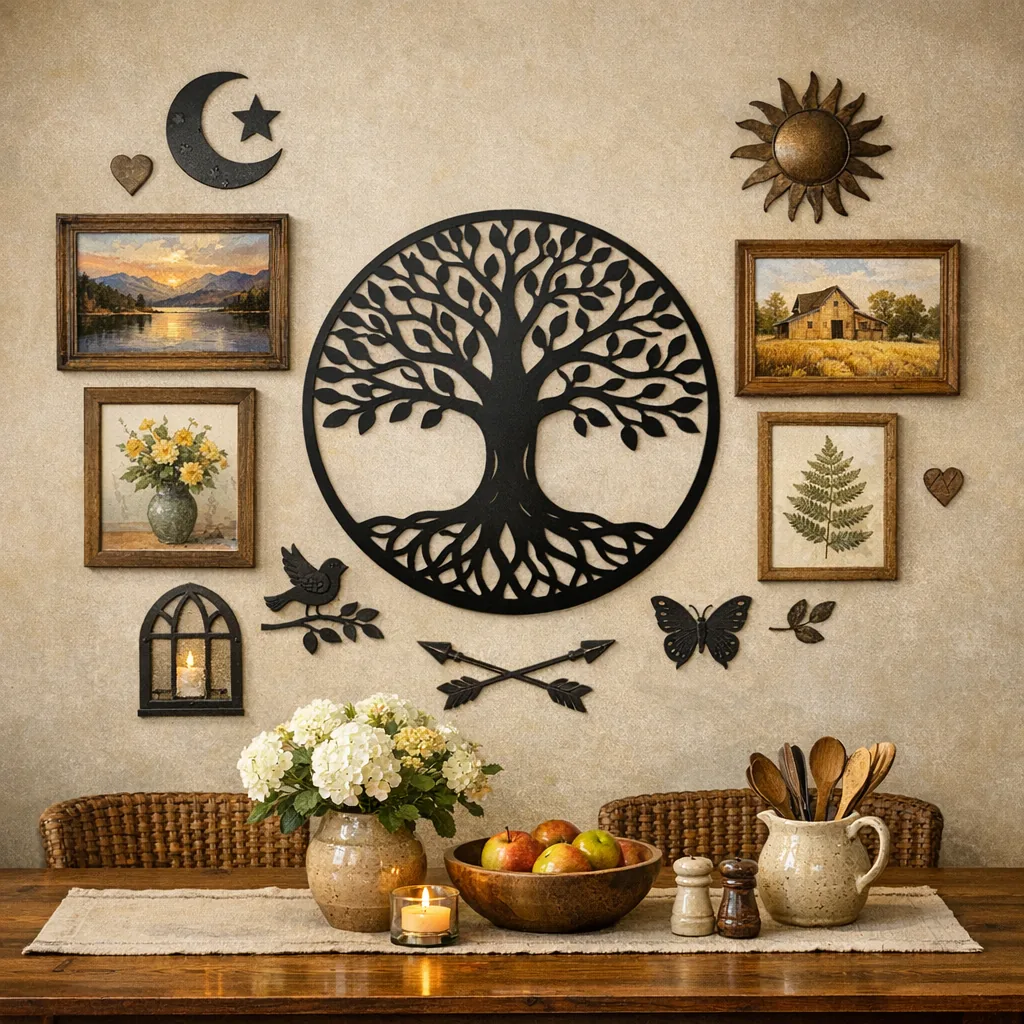
- Gallery wall: mix scales but anchor with one larger metal piece. Keep spacing 2–4″ between frames/metal pieces for a cohesive cluster.
Mounting: for steel pieces over 24″ use two anchors spaced to match the hanger points. Toggle bolts or molly anchors are common. For heavy pieces, a French cleat gives better tolerance on uneven walls.
Color and finish choices that last
Powder-coat colors are consistent and durable. Matte black hides dust. Gloss shows fingerprints. If your room gets bright sun, avoid fluorescent or pastel powder coats unless the coating includes UV inhibitors. A matte neutral — black, charcoal, or warm white — will stay handsome longer in a dining setting.
Personalized metal wall art for family dining rooms
Adding a family name, a tree-of-life, or a custom dining quote turns a decorative piece into something warmer. People often order a custom name sign for Mother’s Day or after a house remodel. My advice: keep text to short lines (one or two). Long paragraphs in thin laser-cut script lose legibility once you pass 24″ in width.
If you want a family sign above the table, size it like art above a rectangular table — 60–75% rule — and center it to the table, not the wall. That little offset looks wrong to the eye. Trust me; we see it in returns more than anyone wants to admit.
For an example of a personalized, farmhouse-leaning option, customers often browse pieces like our custom anniversary metal signs for inspiration on scale and font weight.
Installation tips from the shop floor
- Check wall plate tolerance. If your piece is laser-cut with fine details, those thin tabs can bend in transit. We pack with 3–5 mm foam spacers for anything with cut-outs bigger than a palm.
- Keep at least 1″ clearance from the table edge if you have kids or active serving — collisions happen.
- Use anti-tip hardware on lightweight walls. Even a 20–30 lb piece can peel anchors out of drywall over time if hung on a single screw.
Metal wall art for dining room — quick checklist
- Measure table and wall first; apply 60–75% rule.
- Choose powder-coated steel for long-term color retention and dimensional stability.
- Prefer darker, matte finishes for higher-contrast rooms; lighter finishes for airy, contemporary spaces.
- Personalize text to one or two short lines for legibility.
- Use proper anchors; consider a French cleat for heavier or wide pieces.
Metal wall art can change how a dining room feels — it focuses attention, ties finishes together, and holds up under day-to-day life. Pick the right material, size it to the table, and mount it so the eye rests on the piece while people eat. That’s what makes it feel deliberate instead of an afterthought.
We ship pieces that are cut flat and powder-coated to resist fading and outdoor use, because customers sometimes move art between inside and covered porch spaces. That flexibility matters.
One final note: black works in most rooms. I’d go with the 18–24″ sizing rule for small dining nooks; for a full 84″ farmhouse table, scale up. Simple as that.
For a closer look at personalized family-style options and sizing examples, see our personalized 25th anniversary metal wall sign listing which demonstrates common scales and finishes people choose for dining-room placement.
Choose stable material. Size to the table. Mount it solid.
FAQ
How do I pick the right size of metal wall art for my dining room table?
Measure the table width and aim for art that’s 60–75% of that width for rectangular tables; 50–70% for round tables. Consider sightlines from where people sit and the chandelier height.
Will powder-coated steel hold up in a sunny dining room?
Yes. Powder-coat offers good UV resistance compared with simple painted finishes; it also resists humidity and won’t cup like wood. Still, choose UV-stable pigments for the sunniest exposures.
Should personalized family name signs be centered on the wall or the table?
Center the sign over the table, not the wall. The table is the visual anchor in a dining room; aligning to the table prevents the sign from looking off-balance during meals.
Can I mix metal wall art with framed prints in a gallery arrangement?
Yes. Anchor the gallery with one larger metal piece and arrange framed prints around it. Keep spacing tight (2–4″) and use similar visual weights — a thin-profile metal piece reads lighter than a solid framed canvas, so size accordingly.
What hardware should I use for larger metal pieces?
Use two anchors at the hanger points or a French cleat for pieces wider than 30″. For plaster or brick, use masonry anchors rated for the weight.
